Biomedical Knowledge Graphs & Graph-RAG Systems
Unify literature, omics, structural biology, assays, and internal datasets into one scientific knowledge engine – powered by graph reasoning, embeddings, and agentic RAG.




Accelerate scientific discovery with AI-powered biomedical knowledge graph and Graph-RAG systems
Agentic AI for Hypothesis Generation

Multi-agent reasoning pipelines propose mechanistic hypotheses, biomarkers, MoA candidates, or target–disease links.
Biomedical Knowledge Graph Construction

Integrate and harmonize data from scientific literature, patents, omics repositories, protein databases, pathways, clinical datasets, and your internal research systems.
Graph-RAG Systems for Scientific Question Answering
LLM-powered retrieval augmented with biological embeddings, entity disambiguation, and graph traversal.
Literature Mining & Automated Evidence Mapping
Continuous ingestion and annotation of new publications, preprints, patents, and datasets.
Multi-Omics Integration via Graph Reasoning
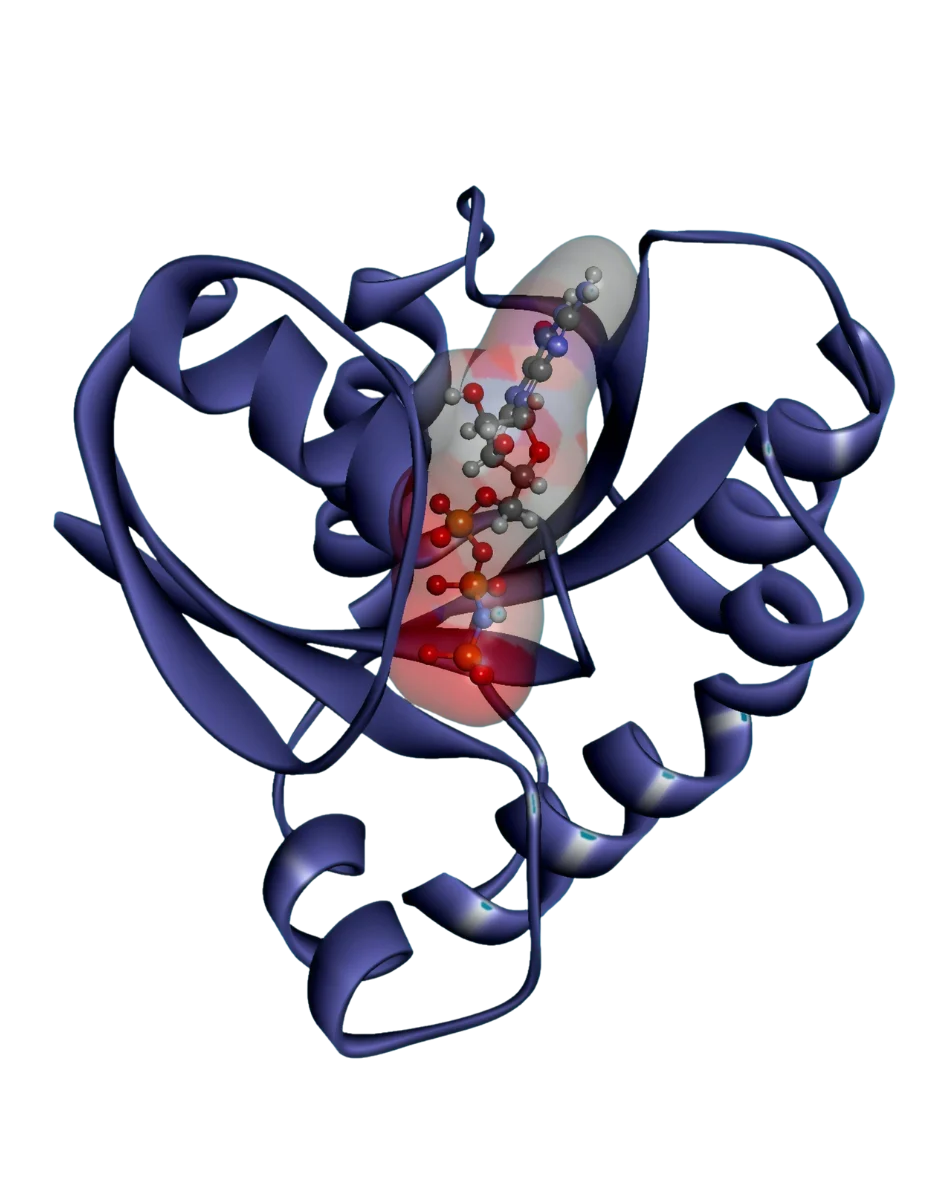
Connect bulk RNA, scRNA-seq, proteomics, metabolomics, structural data, and phenotypic screens.
Enterprise Deployment (HIPAA / GDPR / PHI compliant)
Secure, on-premise or VPC deployment with full audit trails, access control, API integration, and wet-lab platform connectivity.
Key
R&D Challenges We Address
From fragmented data to unified scientific context
-
Teams waste hours switching between papers, databases, ELNs, and internal notes
Knowledge graphs consolidate everything into a single reasoning layer
Reducing hallucinations & ensuring traceability of LLM outputs
-
Standard LLMs provide fluent but untrustworthy answers
Graph-RAG ensures every answer is backed by real scientific evidence
Accelerating early-stage hypothesis generation
-
Discovery cycles slow down due to manual literature reviews and scattered datasets
AI agents propose and validate hypotheses 10× faster.
Connecting internal and external R&D knowledge
-
Data silos between teams cause duplicated experiments and missed insights
Graph-based retrieval provides cross-team visibility and knowledge reuse
De-risking IND-enabling work
-
Predicting immunogenic and liability-prone sequence regions before preclinical studies
Scaling research without scaling human labor
-
As pipelines grow, manually curating and reading data becomes impossible
Continuous ingestion + automated evidence mapping = scalable research ops
Didn’t find exactly what you were looking for?
Tell us what you’re building – we’ll map out the options, evaluate feasibility, and recommend the optimal technical pathway.
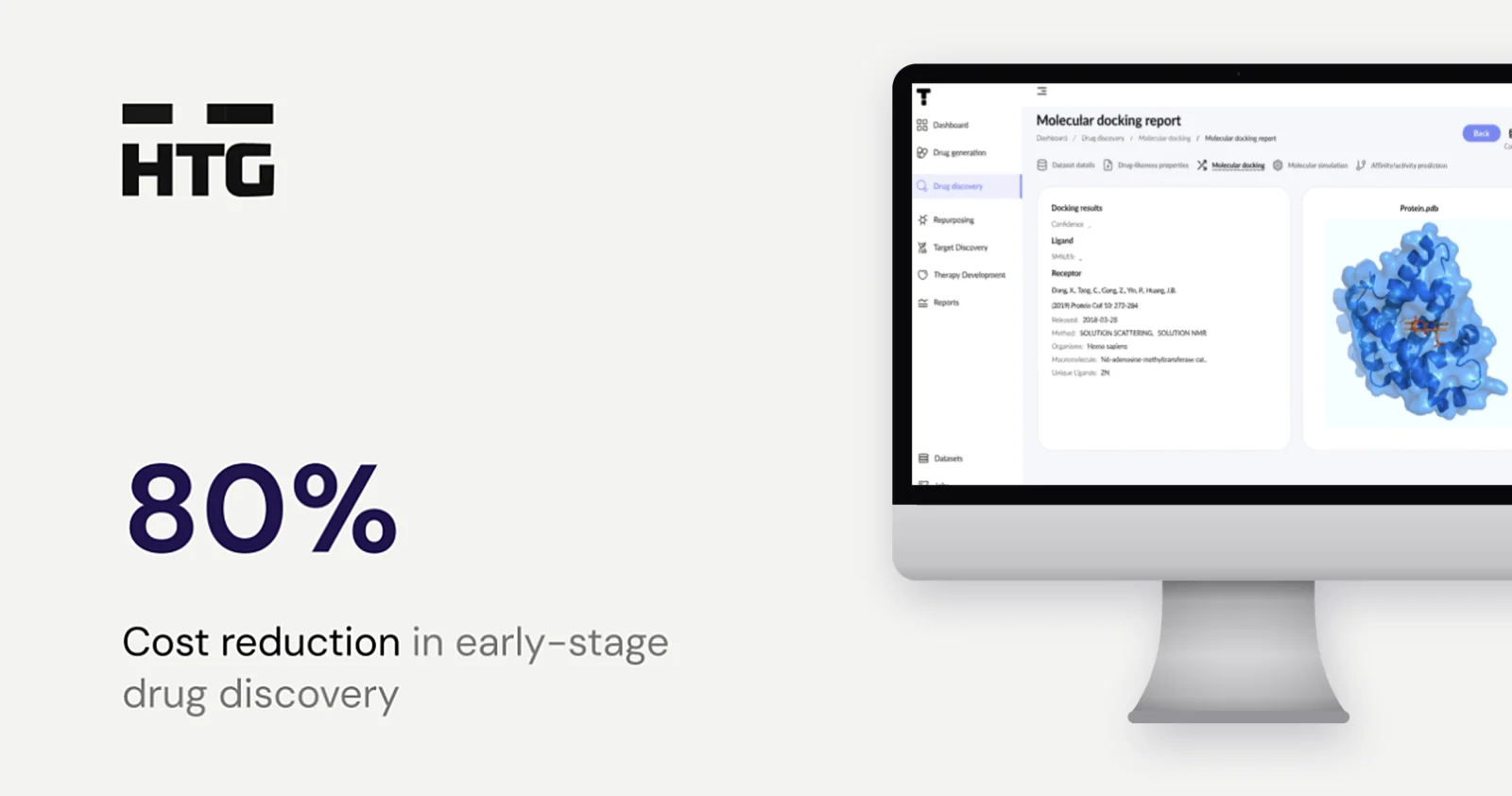
AI Drug Discovery Platform Using Multi-Omics Knowledge Graph & GraphRAG
The team surpassed expectations on timelines, provided much needed guidance and overall input on design, all while operating with a high degree of autonomy.

Carl Kaub
Vice President of Chemistry at HTG Molecular DiagnosticBiotech
Industry
AI Ops & MLOps, Cloud Architecture, UI/UX Design
Services
USA
Location
$200,000 to $999,999
Budget
Business Impact You Can Expect
5–10×
Faster Literature & Evidence SynthesisGraph-aligned retrieval drastically reduces time spent on manual review.
70–90%
Reduction in Missed InsightsKnowledge graphs reveal non-obvious mechanistic links missed by keyword search.
2–4×
Faster Hypothesis GenerationAgentic pipelines accelerate exploration of targets, biomarkers, combinations, or MoA.
>95%
Answer GroundednessGraph-RAG ensures answers always reference real evidence — no hallucinations.
FAQ
Questions R&D teams ask
01What is a biomedical knowledge graph?
It is one connected model of your scientific knowledge, where genes, proteins, pathways, compounds, diseases, publications and internal results are linked entities. We build it from scientific literature, patents, omics repositories, protein and pathway databases, clinical datasets and your internal research systems.
02How is Graph-RAG different from a standard LLM chatbot?
A standard LLM answers fluently but cannot show where an answer came from. Graph-RAG retrieves evidence through the knowledge graph, using biological embeddings, entity disambiguation and graph traversal, so each answer points to the papers, datasets or records behind it.
03Can we use our own internal data?
Yes. Internal datasets, ELN notes and assay results are connected alongside public sources. Deployment can be on-premise or in your VPC, with access control, audit trails and API integration.
04What can AI agents do on top of the graph?
Multi-agent pipelines can propose mechanistic hypotheses, biomarkers, mechanism-of-action candidates or target–disease links. Continuous ingestion annotates new publications, preprints, patents and datasets, so the evidence map stays current.
Let’s build your AI advantage
Whether you’re prototyping a molecule scoring system or looking to automate your clinical ops – we’ll help you turn your biotech data into competitive edge.