Peptide Engineering for Therapeutic Discovery
AI-assisted peptide design, optimization, and developability assessment to reduce experimental cycles and downstream attrition in peptide-based therapeutics.




AI-Powered Peptide Engineering Capabilities
De Novo & Guided Peptide Design

Transformer- and diffusion-based sequence generation enables de novo and guided peptide design under explicit constraints such as length, charge, sequence motifs, and target interaction requirements.
Peptide-Protein Interaction Modeling
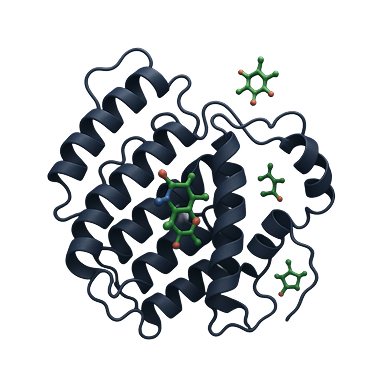
Interface scoring and hotspot identification are used to prioritize biologically plausible binding modes for peptide modulators or inhibitors.
In Silico Optimization & Mutagenesis

Multi-objective optimization simultaneously balances affinity, stability, and solubility, with rational mutation proposals generated in a fully traceable manner.
Structure & Conformation Prediction
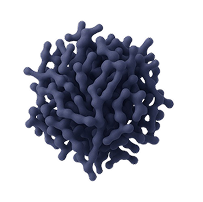
Sequence-to-structure modeling captures peptide conformational ensembles rather than relying on single static structures, improving relevance for flexible and disordered peptides.
Developability & Liability Prediction

Early prediction of aggregation, degradation, and immunogenicity signals highlights manufacturability and formulation risks before experimental validation.
Integration with Experimental Pipelines
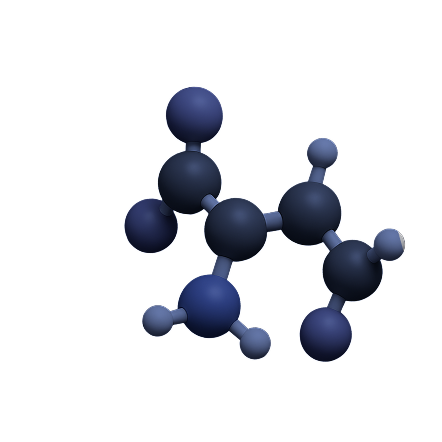
Optimized peptide variants are delivered as synthesis-ready lists designed to integrate seamlessly with CRO workflows or internal wet-lab pipelines.
10×
larger virtual screening spaceCompared to manual or heuristic peptide design
50–70%
fewer wet-lab iterationsThrough early in silico triage
2-3×
improvement in hit qualityWhen ranking by affinity and developability
2×
faster progression to lead candidatesWeeks instead of quarters in early optimization
AI-Driven Drug Discovery for Enamine’s 36B Molecule Library
The system combined machine learning–based affinity prediction, large-scale virtual screening, and docking simulations (DiffDock) with active learning loop
The team showed initiative and proactiveness in developing alternative solutions to reach our goals. As a result, we obtained very complex and high-quality support.

Under NDA
CEO, Chemistry Solutions CompanyBiotech
Industry
Drug Discovery, AI compound screening, Chemical space optimization
Services
USA
Location
$200,000 to $999,999
Budget
Our Peptide Engineering
Workflow
Problem Definition & Constraints
-
Target biology, mechanism of action, and intended modulation strategy
-
Peptide class constraints (length range, linear vs. cyclic, chemical modifications)
-
Practical synthesis and assay constraints defined by internal teams or CRO partners
-
Developability criteria, including solubility, stability, aggregation risk, and formulation considerations
-
Structural or interaction context (known binding sites, interfaces, or templates)
Design & Variant Generation
-
De novo generation for unexplored sequence space or novel mechanisms
-
Guided design informed by known motifs, structural templates, or reference peptides
-
Library generation at scales typically ranging from 10⁴ to 10⁶ variants
-
Explicit control over sequence diversity, charge distribution, and physicochemical properties
-
Metadata completeness, validate raw omics inputs, detect batch effects, harmonize files across heterogeneous sources, and consistently enforce internal SOP rules.
-
Full traceability between generated variants and the constraints that produced them
In Silico Screening & Ranking
-
Peptide–target interaction scoring where structural context is available
-
Stability and conformational behavior assessment for flexible or disordered peptides
-
Solubility, aggregation, and degradation risk estimation
-
Early liability and developability signal detection
-
Composite ranking that balances biological activity with downstream feasibility
Shortlist for Synthesis & Iterative Refinement
-
Selection of a small, explainable subset of top-ranked peptides
-
Clear rationale for inclusion of each candidate (binding, stability, or risk profile)
-
Optional diversification to hedge against model uncertainty
-
Export-ready variant lists compatible with internal synthesis pipelines or CRO workflows
-
Incorporation of wet-lab results into model updates when available
-
Re-weighting of objectives based on observed assay outcomes
-
Progressive narrowing of design space across iterations
Didn’t find exactly what you were looking for?
Tell us what you’re building – we’ll map out the options, evaluate feasibility, and recommend the optimal technical pathway.
Key R&D Challenges
We Address
Higher Functional Hit Probability per Experimental Round
-
Prioritization of high-confidence peptide variants before synthesis
-
Reduction of low-information experimental cycles driven by random or heuristic design
-
Focus on candidates with balanced activity and physicochemical profiles
-
More efficient allocation of wet-lab resources per discovery sprint
Avoiding Unstable or Non-Viable Peptide Sequences
-
Early identification of aggregation-prone and degradation-prone sequences
-
Assessment of conformational stability for flexible or disordered peptides
-
Filtering of sequences with unfavorable solubility or formulation characteristics
-
Reduced attrition caused by synthesis or purification failures
Rational Design of Peptide Modulators and Inhibitors
-
Mapping of peptide-protein interaction interfaces where structural context is available
-
Identification of binding hotspots relevant to modulation or inhibition
-
Optimization of sequence variants around biologically meaningful interactions
-
Improved interpretability of why specific candidates are selected
Lowering Manufacturing and Formulation Risk Early
-
Early detection of manufacturability and scale-up risks
-
Identification of liabilities related to aggregation, stability, or chemical modifications
-
Alignment of design decisions with downstream formulation constraints
-
Fewer late-stage redesigns driven by production limitations
Evaluate peptide feasibility and risk before experiments.
Request a technical discussion.