See the Patent Space Around Your Target Before You Commit R&D Spend
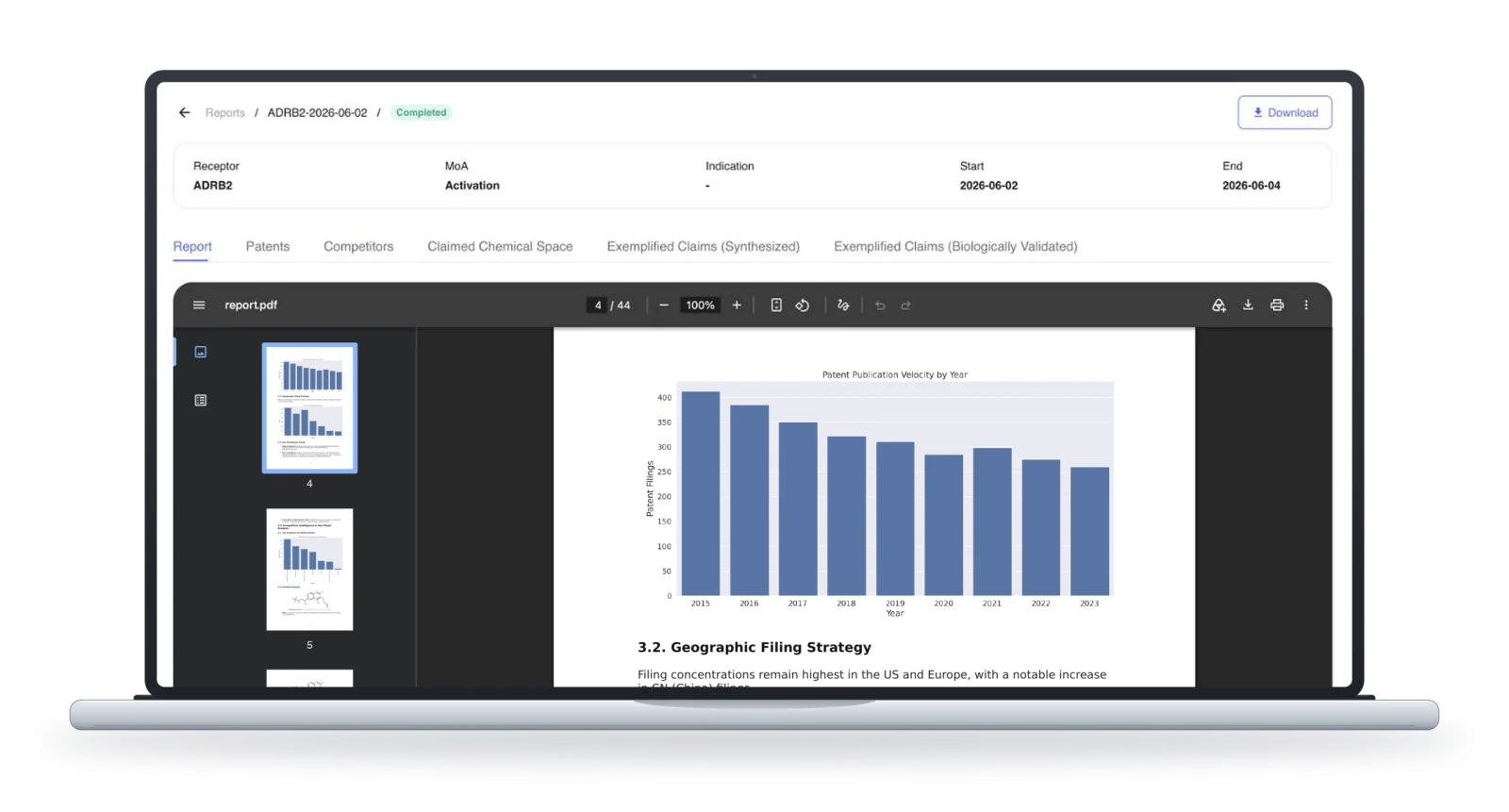
ClaimLens™ screens small-molecule patents around one target, separates claimed, synthesized and tested compounds, and shows where the landscape looks less crowded, as a first-pass freedom to operate screen for expert review.
Find the Patents That Matter for Your Target
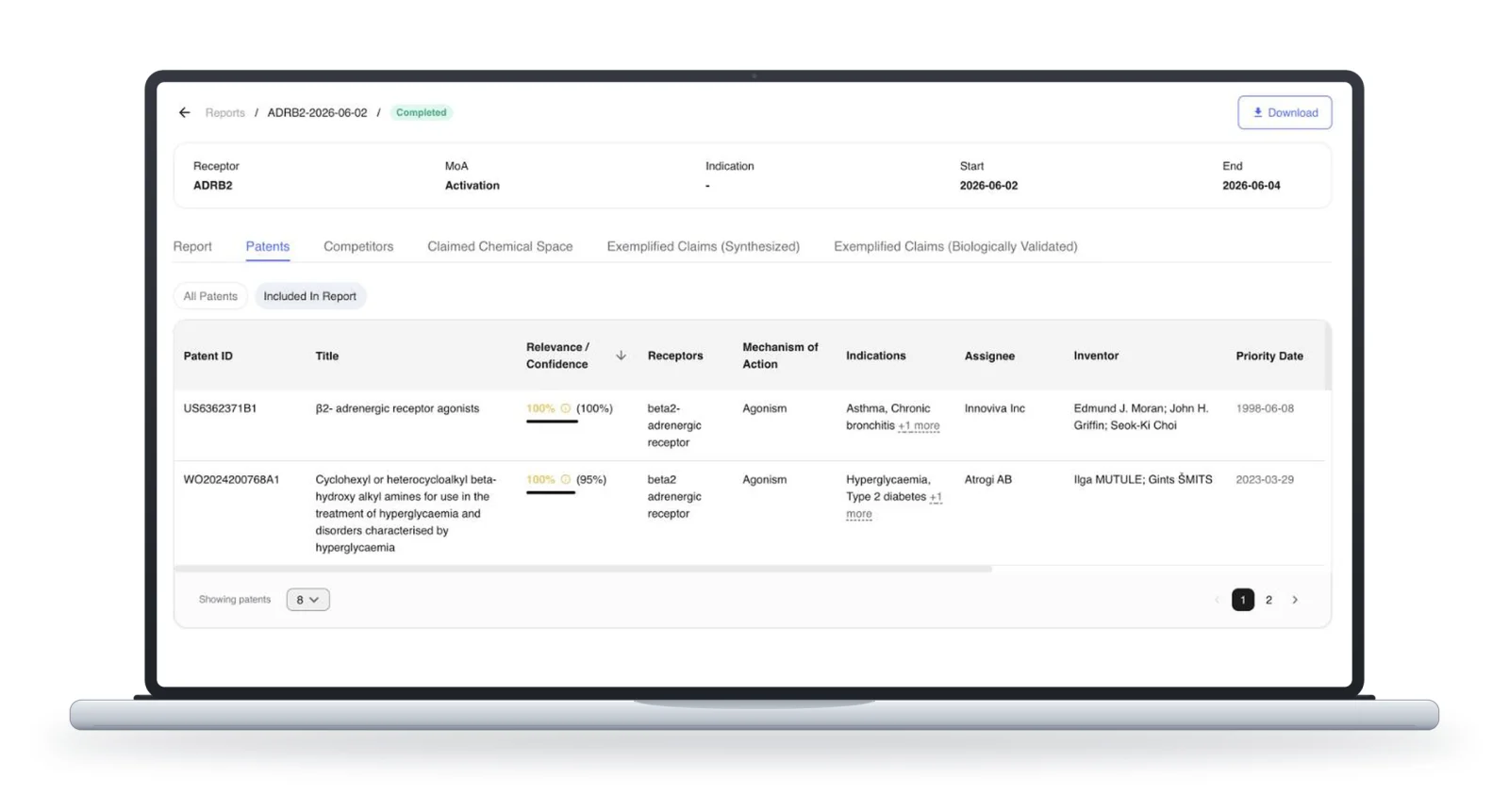
ClaimLens gathers patents for a target from public patent records, checks that each one claims small molecules, and scores it for target, mechanism and indication match. Each score has a confidence level and a written rationale your IP team can check.
Read Markush Claims as Chemistry, Not Prose
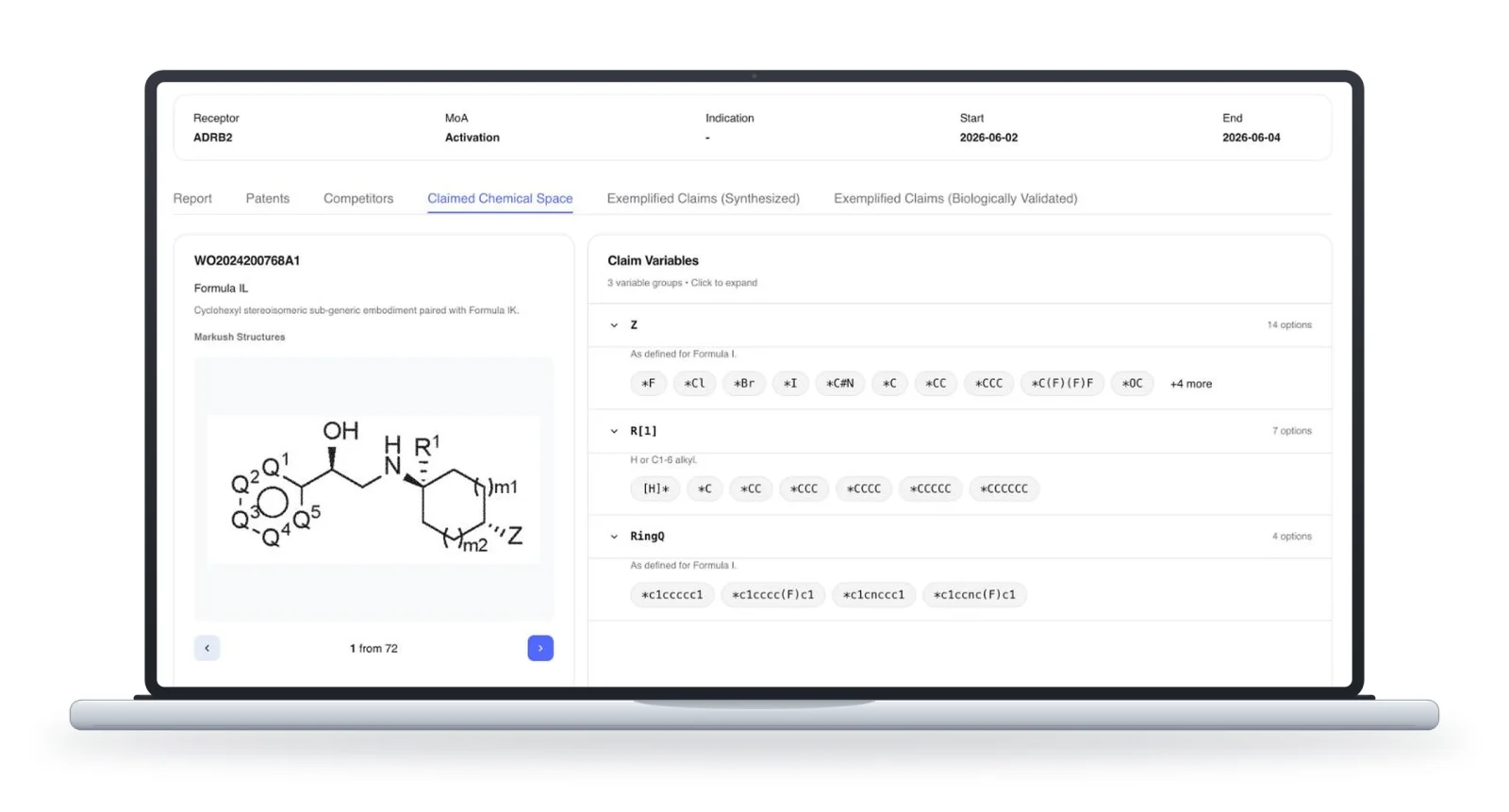
ClaimLens pulls claimed Markush scaffolds from each patent and lists their variable groups with the options each one allows. Broad Markush claims are hard to parse automatically, so your chemists confirm the readings that drive a decision.
Separate What Was Claimed, Made and Tested
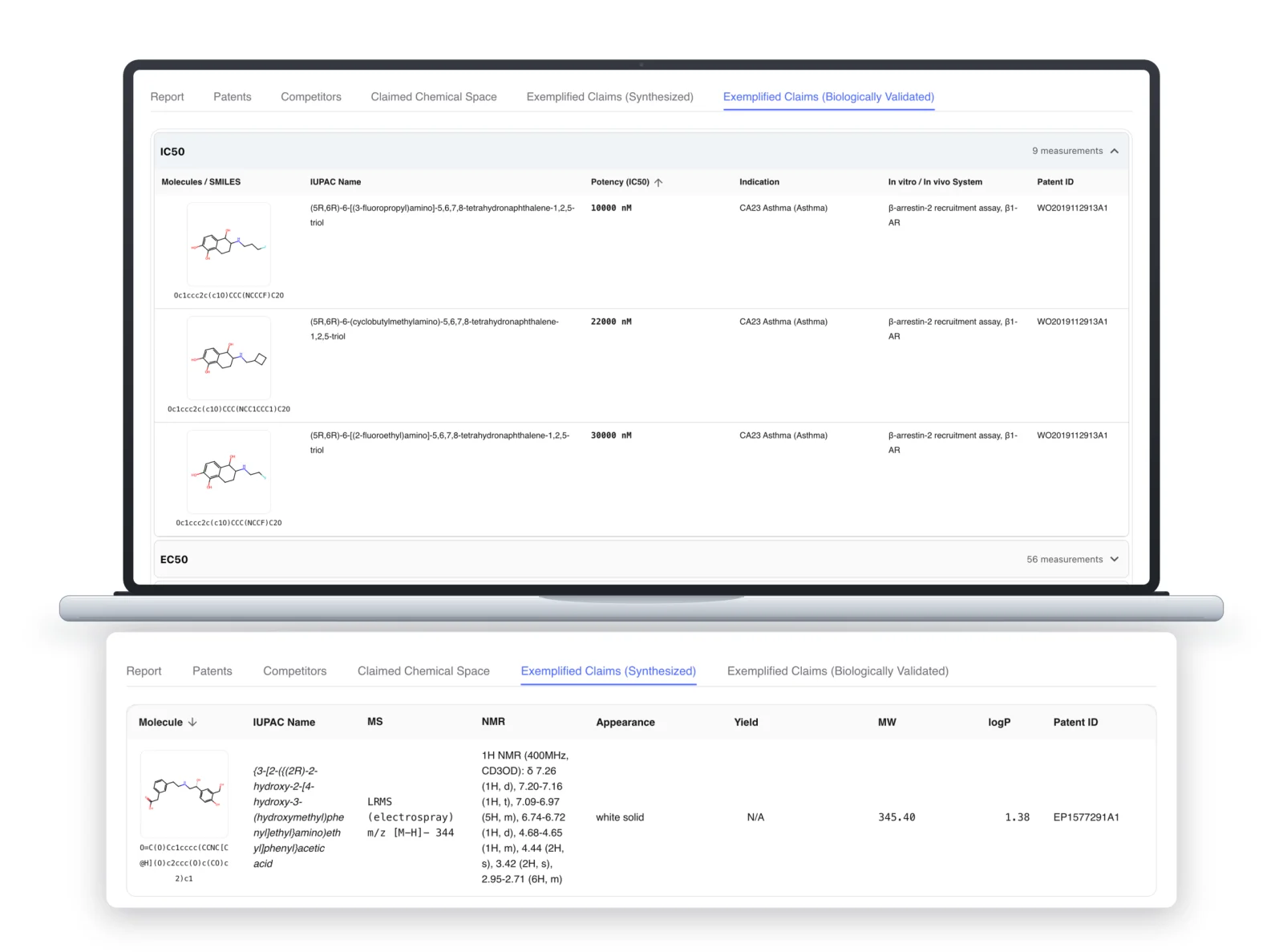
Three evidence levels, kept apart patent by patent:
- Claimed: Markush scaffolds with their substituent definitions.
- Synthesized: exemplified compounds with structure, SMILES, MS, NMR and yield.
- Tested: IC50, EC50, Ki or Kd values with assay conditions, beside the reported structure.
See Who Holds the Space, Where, and How Deep
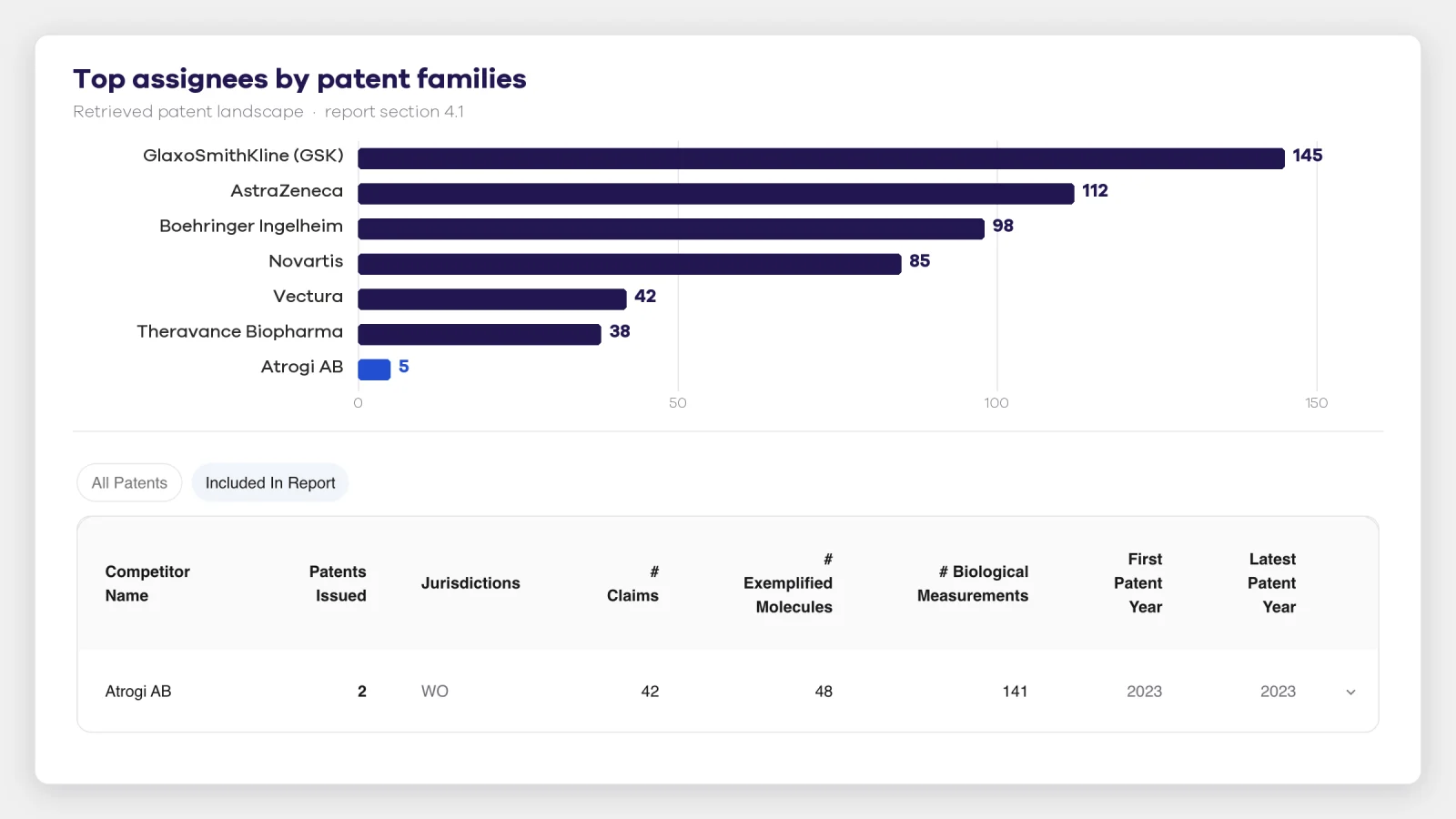
A competitor table counts each assignee’s patents, jurisdictions, and claimed, synthesized and tested compounds, with first and latest patent year. Charts show filing activity by year and country.
Spot Less-Crowded Directions Before a Series Gets Budget
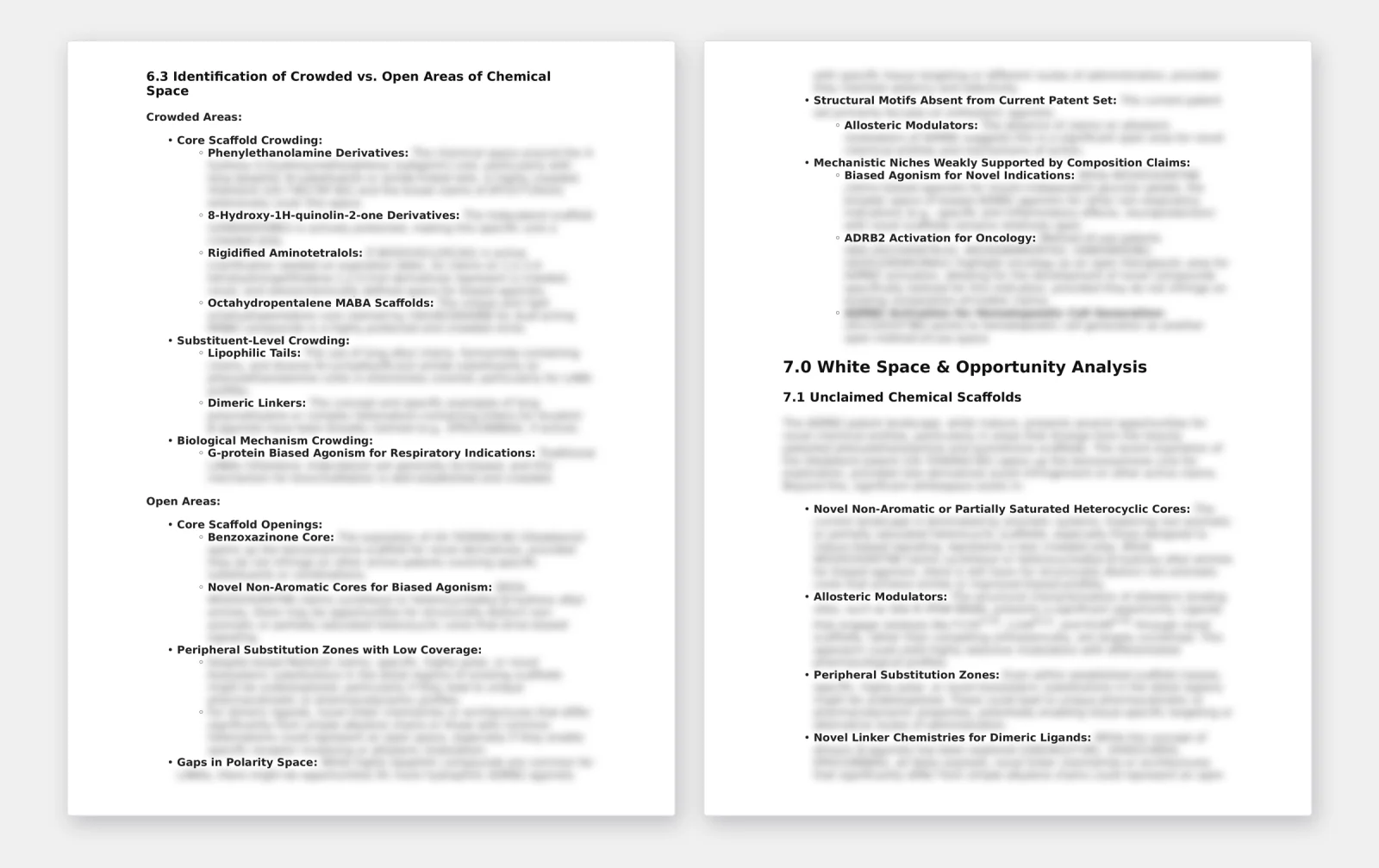
The report flags scaffolds and mechanisms that look less crowded in the retrieved patents, so R&D and counsel can weigh design-around options.
How a ClaimLens Screen Runs
A first-pass freedom to operate analysis, one target per run.
01
-
Scope
Name one target and, if useful, narrow by mechanism of action, indication, publication date range and jurisdictions (all are included by default).
02
-
Retrieve
ClaimLens gathers candidate patents for the target from public patent records.
-
Prioritize
An AI model scores each patent for relevance and explains why.
03
-
Extract
Claimed scaffolds, synthesized examples and assay tables are read from patent text and images.
04
-
Report and Expert Review
You receive a PDF report with exhibit tables for patents, competitors, and claimed, synthesized and tested compounds. Your attorneys confirm claim scope, legal status and conclusions.
Who It Is For
1 Head of IP and Patent Counsel
A structured first-pass file to review and escalate, so outside counsel starts from evidence instead of from zero.
2 CSO and VP R&D
An early read on how crowded a target is before you commit chemistry and biology spend.
3 Head of Medicinal Chemistry
Claimed scaffolds, exemplified compounds and assay values in one place for design-around work.
4 BD, Licensing and Diligence
Start diligence from a ranked patent list and see who holds the space around the target behind an in-licensing or investment opportunity.
Questions About ClaimLens
Is this a legal opinion?
+No. ClaimLens is a first-pass FTO screen for expert review, not legal advice. Decisions on freedom to operate belong with qualified patent counsel.
What do I need to provide?
+One protein target (a new target may need a setup step before its first run). Optionally, a mechanism of action, an indication, a publication date range and jurisdictions: US, EP, CN, JP, GB, CA, IN, BR, KR, AU, HK or WO.
What does it not cover?
+Each run covers one target and small molecules only. Biologics, sequence searches and method-of-use patents are out of scope. Scientific literature and other non-patent prior art are not searched, search recall has not been benchmarked against a professional search, and searching by a specific molecule is not available. ClaimLens does not verify legal status or expiry dates; confirm them in national patent registers.
How long does a run take?
+Logged runs have taken from a few hours to several days per target, depending on how many patents are in scope and how much chemistry they contain.
How do we check the findings?
+In the app, each patent, compound and assay row shows its source patent number, so reviewers can go back to the original. Extraction can miss rows in long tables, and the narrative sections are AI-written, so your chemists and counsel should check key findings against the source patents.
Start With a Scoped Demo on a Public Target
See a ClaimLens screen of small-molecule patents on a public target, then decide with our team whether a screen fits your programme. ClaimLens is a first-pass screen for expert review, not legal advice.
Get in touch with us.
We’re here to assist you.