Peptide Engineering for Therapeutic Discovery
AI-assisted peptide design, optimization, and developability assessment to reduce experimental cycles and downstream attrition in peptide-based therapeutics.




AI-Powered Peptide Engineering Capabilities
De Novo & Guided Peptide Design

Transformer- and diffusion-based sequence generation enables de novo and guided peptide design under explicit constraints such as length, charge, sequence motifs, and target interaction requirements.
Peptide-Protein Interaction Modeling
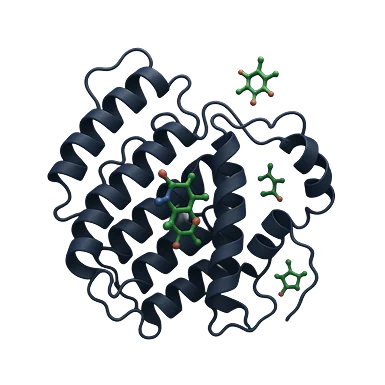
Interface scoring and hotspot identification are used to prioritize biologically plausible binding modes for peptide modulators or inhibitors.
In Silico Optimization & Mutagenesis
Multi-objective optimization simultaneously balances affinity, stability, and solubility, with rational mutation proposals generated in a fully traceable manner.
Structure & Conformation Prediction
Sequence-to-structure modeling captures peptide conformational ensembles rather than relying on single static structures, improving relevance for flexible and disordered peptides.
Developability & Liability Prediction

Early prediction of aggregation, degradation, and immunogenicity signals highlights manufacturability and formulation risks before experimental validation.
Integration with Experimental Pipelines
Optimized peptide variants are delivered as synthesis-ready lists designed to integrate seamlessly with CRO workflows or internal wet-lab pipelines.
10×
larger virtual screening spaceCompared to manual or heuristic peptide design
50–70%
fewer wet-lab iterationsThrough early in silico triage
2-3×
improvement in hit qualityWhen ranking by affinity and developability
2×
faster progression to lead candidatesWeeks instead of quarters in early optimization
AI-Driven Drug Discovery for Enamine’s 36B Molecule Library
The system combined machine learning–based affinity prediction, large-scale virtual screening, and docking simulations (DiffDock) with active learning loop
The team showed initiative and proactiveness in developing alternative solutions to reach our goals. As a result, we obtained very complex and high-quality support.

Under NDA
CEO, Chemistry Solutions CompanyBiotech
Industry
Drug Discovery, AI compound screening, Chemical space optimization
Services
USA
Location
$200,000 to $999,999
Budget
Our Peptide Engineering
Workflow
Problem Definition & Constraints
-
Target biology, mechanism of action, and intended modulation strategy
-
Peptide class constraints (length range, linear vs. cyclic, chemical modifications)
-
Practical synthesis and assay constraints defined by internal teams or CRO partners
-
Developability criteria, including solubility, stability, aggregation risk, and formulation considerations
-
Structural or interaction context (known binding sites, interfaces, or templates)
Design & Variant Generation
-
De novo generation for unexplored sequence space or novel mechanisms
-
Guided design informed by known motifs, structural templates, or reference peptides
-
Library generation at scales typically ranging from 10⁴ to 10⁶ variants
-
Explicit control over sequence diversity, charge distribution, and physicochemical properties
-
Full traceability between generated variants and the constraints that produced them
In Silico Screening & Ranking
-
Peptide–target interaction scoring where structural context is available
-
Stability and conformational behavior assessment for flexible or disordered peptides
-
Solubility, aggregation, and degradation risk estimation
-
Early liability and developability signal detection
-
Composite ranking that balances biological activity with downstream feasibility
Shortlist for Synthesis & Iterative Refinement
-
Selection of a small, explainable subset of top-ranked peptides
-
Clear rationale for inclusion of each candidate (binding, stability, or risk profile)
-
Optional diversification to hedge against model uncertainty
-
Export-ready variant lists compatible with internal synthesis pipelines or CRO workflows
-
Incorporation of wet-lab results into model updates when available
-
Re-weighting of objectives based on observed assay outcomes
-
Progressive narrowing of design space across iterations
Didn’t find exactly what you were looking for?
Tell us what you’re building – we’ll map out the options, evaluate feasibility, and recommend the optimal technical pathway.
Key R&D Challenges
We Address
Higher Functional Hit Probability per Experimental Round
-
Prioritization of high-confidence peptide variants before synthesis
-
Reduction of low-information experimental cycles driven by random or heuristic design
-
Focus on candidates with balanced activity and physicochemical profiles
-
More efficient allocation of wet-lab resources per discovery sprint
Avoiding Unstable or Non-Viable Peptide Sequences
-
Early identification of aggregation-prone and degradation-prone sequences
-
Assessment of conformational stability for flexible or disordered peptides
-
Filtering of sequences with unfavorable solubility or formulation characteristics
-
Reduced attrition caused by synthesis or purification failures
Rational Design of Peptide Modulators and Inhibitors
-
Mapping of peptide-protein interaction interfaces where structural context is available
-
Identification of binding hotspots relevant to modulation or inhibition
-
Optimization of sequence variants around biologically meaningful interactions
-
Improved interpretability of why specific candidates are selected
Lowering Manufacturing and Formulation Risk Early
-
Early detection of manufacturability and scale-up risks
-
Identification of liabilities related to aggregation, stability, or chemical modifications
-
Alignment of design decisions with downstream formulation constraints
-
Fewer late-stage redesigns driven by production limitations
FAQ
Questions R&D teams ask
01What does AI-assisted peptide engineering include?
De novo and guided peptide design, peptide–protein interaction modeling, multi-objective optimization of affinity, stability and solubility, conformational ensemble prediction, and early prediction of aggregation, degradation and immunogenicity risk. The output is a synthesis-ready shortlist.
02What design constraints can you respect?
Length range, charge, sequence motifs, linear or cyclic format, chemical modifications, target interaction requirements, and your synthesis and assay constraints. Every generated variant stays traceable to the constraints that produced it.
03How large are the virtual libraries?
Typically 10⁴ to 10⁶ variants per design round, with explicit control of diversity, charge distribution and physicochemical properties. From these we select a small, explainable subset for synthesis.
04Do you work with our CRO or internal lab?
Yes. Shortlists are exported in a format your synthesis pipeline or CRO can use, and wet-lab results are fed back to re-weight the objectives and narrow the design space in the next round.
Evaluate peptide feasibility and risk before experiments.
Request a technical discussion.