- Customer Stories
- /
- AI for Home-Cage Behaviour Analysis

AI for Home-Cage Behaviour Analysis
Turning side-view video into per-minute behavioural readouts for preclinical research.
Mouse detection AP50
on 100 held-out frames
Detection AP50 gain
over the off-the-shelf model
Detection, pose and tracking
per minute of video on a single GPU
iMouse offers a retrofit observation system for standard laboratory home cages. Blackthorn AI is building a computer vision pipeline for the system that converts side-view recordings into behavioural analytics.
Detection, pose estimation and activity readouts are in use in the research pipeline.
Industrial & Inspection, Life Sciences
Industry
Computer Vision
Services
Germany
Location
Applied AI research · ongoing
Engagement
From hours of home-cage video to consistent behavioural measurements
Researchers need to compare behaviour over time without relying on isolated manual observations. Side-view recordings capture posture and vertical movement, but overlapping animals, cage furniture, infrared lighting and camera angle make automated analysis difficult. iMouse needed models adapted to its own recordings, agreed behaviour definitions and outputs in the format its scientists use.
One pipeline from video to research readouts
Blackthorn AI has built a pipeline that detects mice, tracks them and estimates their pose, with models trained on hand-labelled iMouse footage. Behavioral readouts are aggregated per cage and minute, exported as CSV and paired with overlay videos.
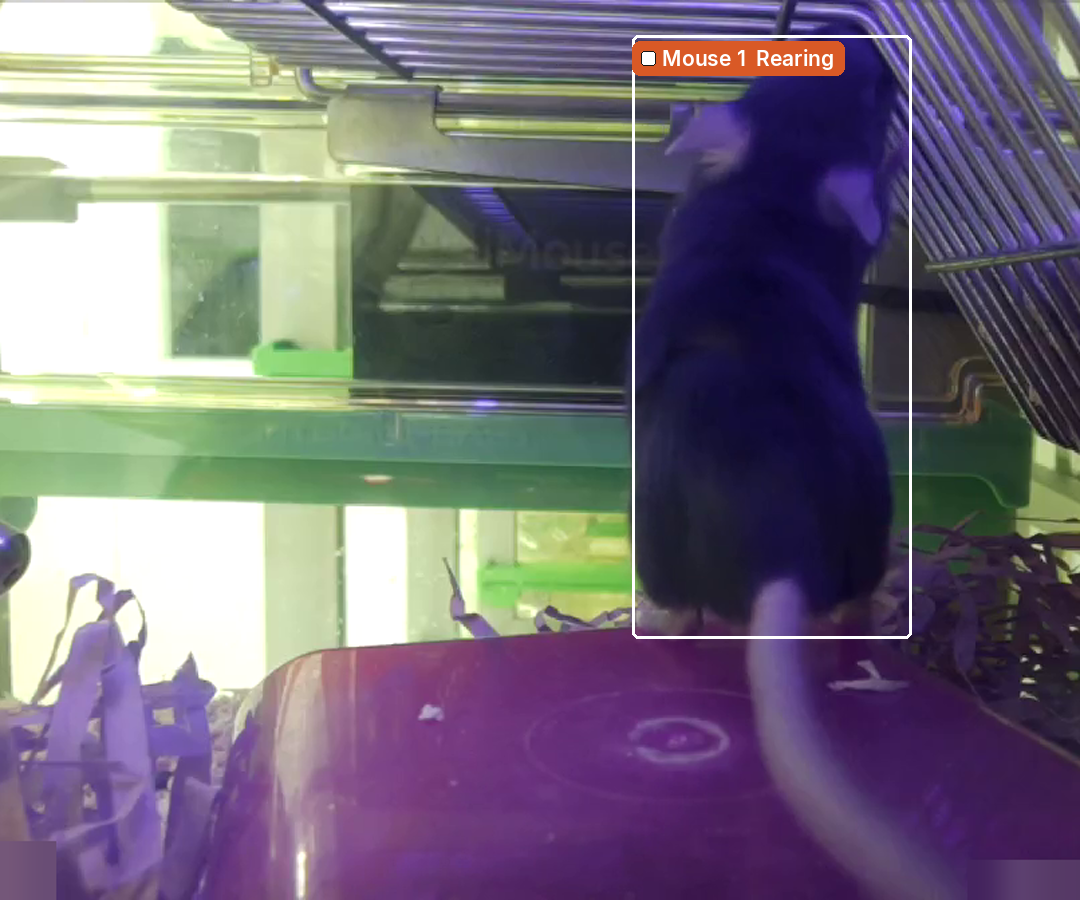
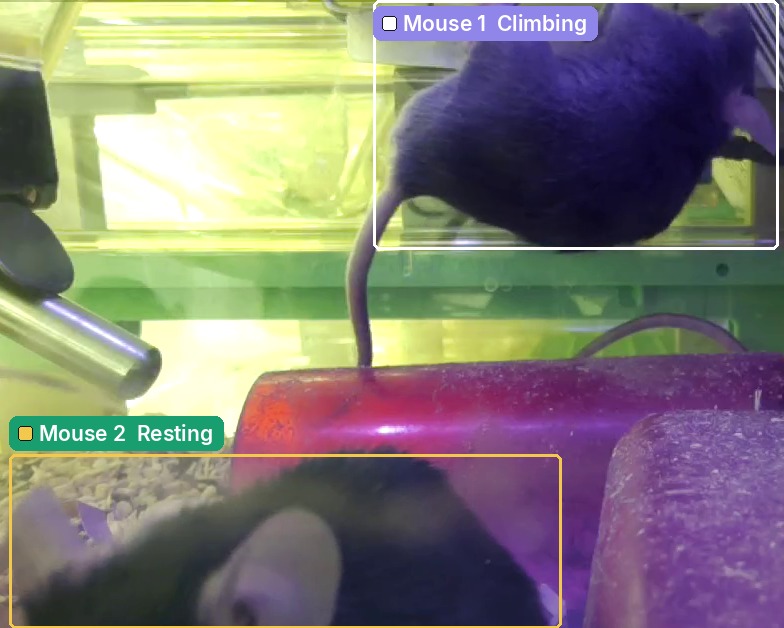
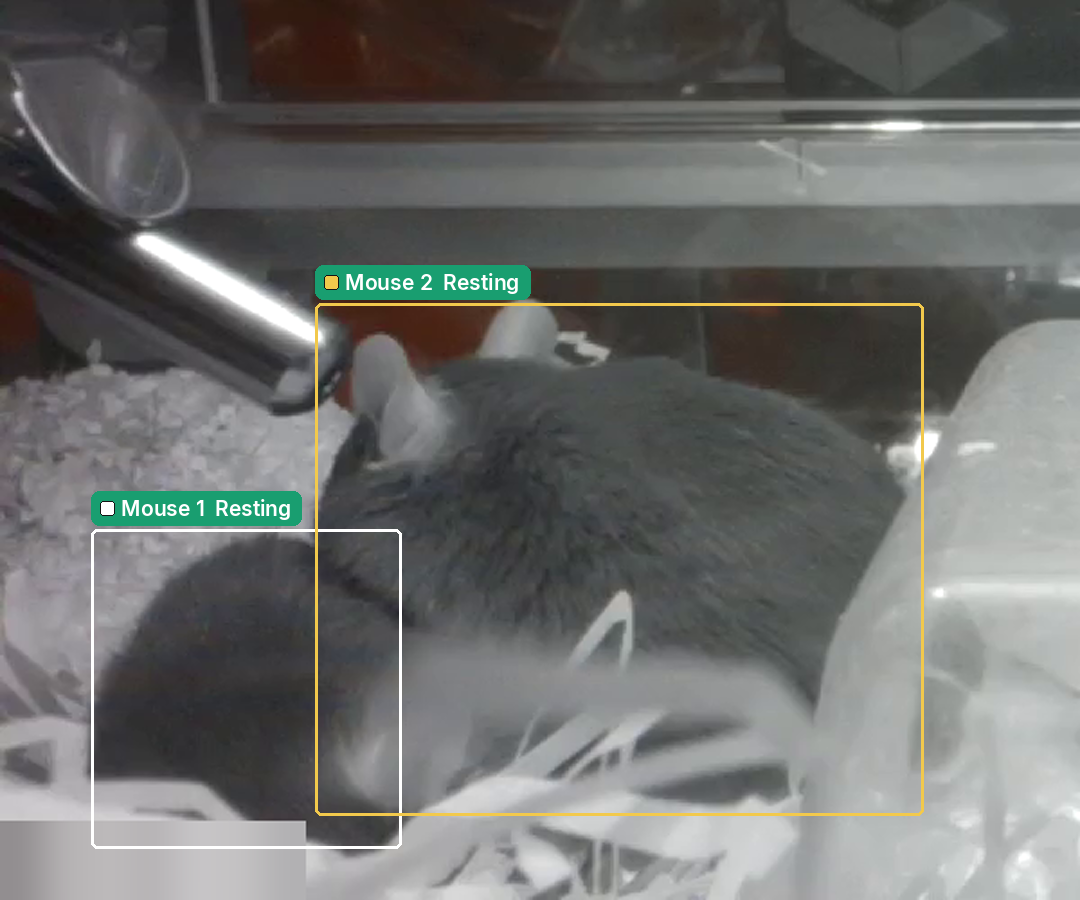
Built with Python, PyTorch and OpenCV, with CVAT for box and keypoint labelling.




Project duration
Initial engagement: October 2026–January 2027.
Oct 2026 Data foundation
Audited recordings, timestamps and camera-to-cage mappings. Established box and keypoint labelling protocols and prepared held-out evaluation data.
Oct–Nov Perception & activity
Mouse detection and pose estimation on iMouse recordings. Added false-box filtering, activity readouts and per-minute exports.
Nov–Jan Behaviour models & batch run
Annotating behaviour, evaluating and retraining classifiers, and preparing a pipeline run across all recording rounds.
Team Size




Results to Date
Research benchmarks as of 13 November 2026. Accuracy varies with camera view, occlusion and lighting. Resting is currently estimated from periods of low movement and can include grooming or eating.
0.91
Detection AP50Mouse detection AP50 on 100 held-out, human-labelled frames.
3×
Gain over off-the-shelfFine-tuning on hand-labelled iMouse frames lifted mouse detection AP50 from 0.30 (zero-shot) to 0.91.
5–7 s
Processing per video minuteDetection, pose estimation and tracking process one minute of video in about 5–7 seconds on a single GPU.