- Customer Stories
- /
- Edge AI Food Quality Control for Fast-Food Kitchens
Edge AI Food Quality Control for Fast-Food Kitchens
Real-time pass/reject checks as each dish is plated, made on the edge device with no kitchen video sent to the cloud.
Dish recognition
accuracy
Per-ingredient
counting accuracy
From brief to a working
on-device pipeline
A multi-site food-service operator is standardising dish quality, where every plate has to meet the same spec regardless of location or cook. Blackthorn AI built an edge AI system for food quality control: computer vision counts each component and a rule engine makes the pass/reject call.
Blackthorn AI validated the pipeline on the target NXP edge device for real-time operation and handed it over with the labelled dataset and deployment documentation, six weeks after the brief.
Industrial & Inspection
Industry
Computer Vision, Edge AI, MLOps, Data Annotation
Services
Netherlands
Location
Edge computer vision · 6 weeks
Engagement
A pass-or-reject quality check at the moment of plating, on-device, not in the cloud
Quality control in a fast-food kitchen is a real-time decision: each plate is served or remade within seconds, and a wrong call means food waste, a slower ticket or a complaint. The client needed to automate that check across sites without streaming video to the cloud: continuous upload is impractical at scale, and cloud round-trips are too slow and too costly. The rules are strict and countable: 14 sausages spread evenly to the edge of a pizza, two diagonally cut toast slices, an intact egg yolk, 85 g of beans. The system has to count components, judge portions, apply spatial rules and decide.
A two-stage edge AI pipeline for real-time food quality control
Blackthorn AI built the check to run in real time, entirely on the edge device. In the first stage, quantised detection and segmentation models, fine-tuned on the client’s dishes and running on the NPU, detect and count every component: bacon, sausages, hash browns, toast and beans. In the second, a rule engine on the same device checks that output against the kitchen’s QA rules and returns pass or fail with the reason attached.

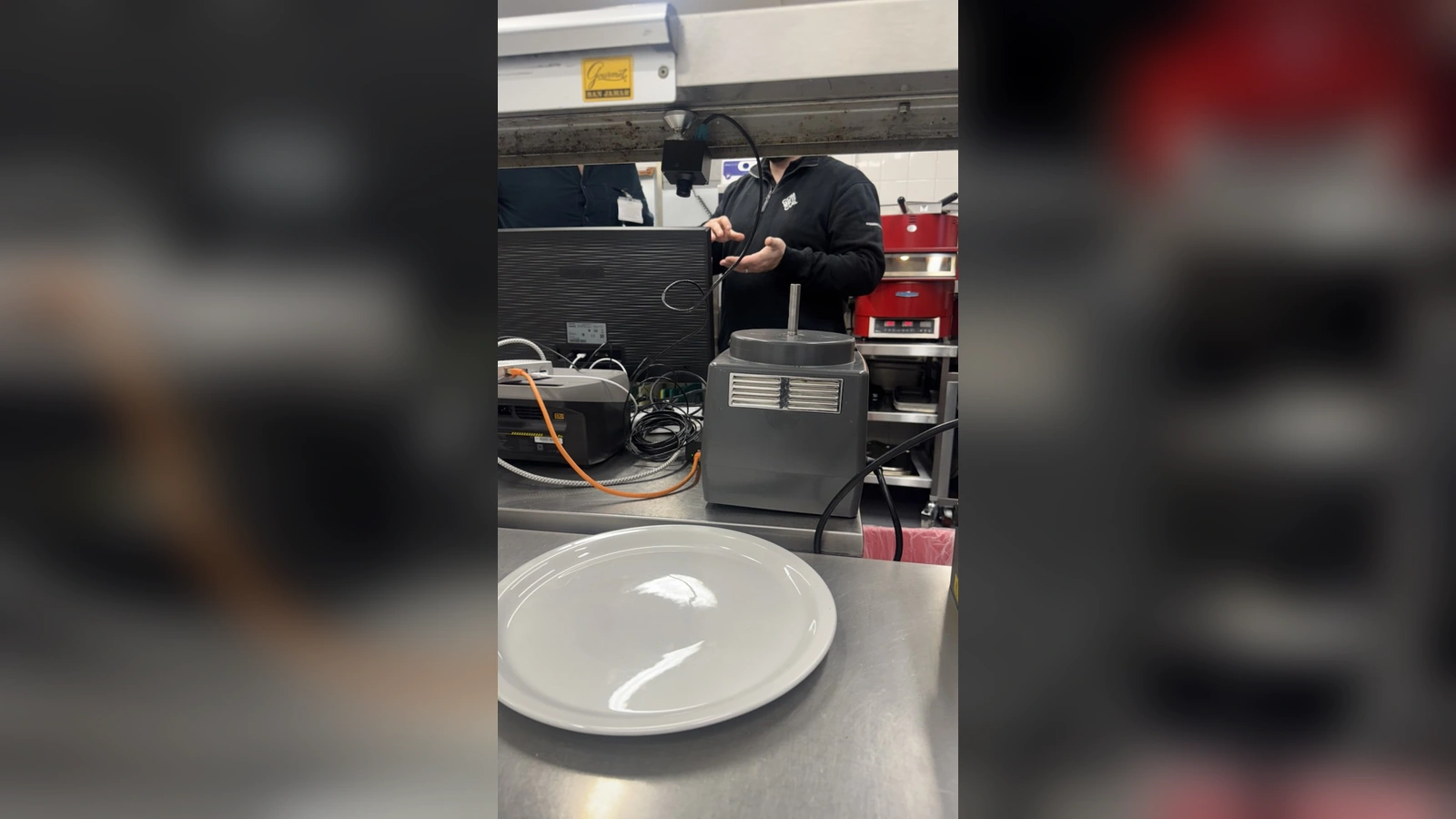
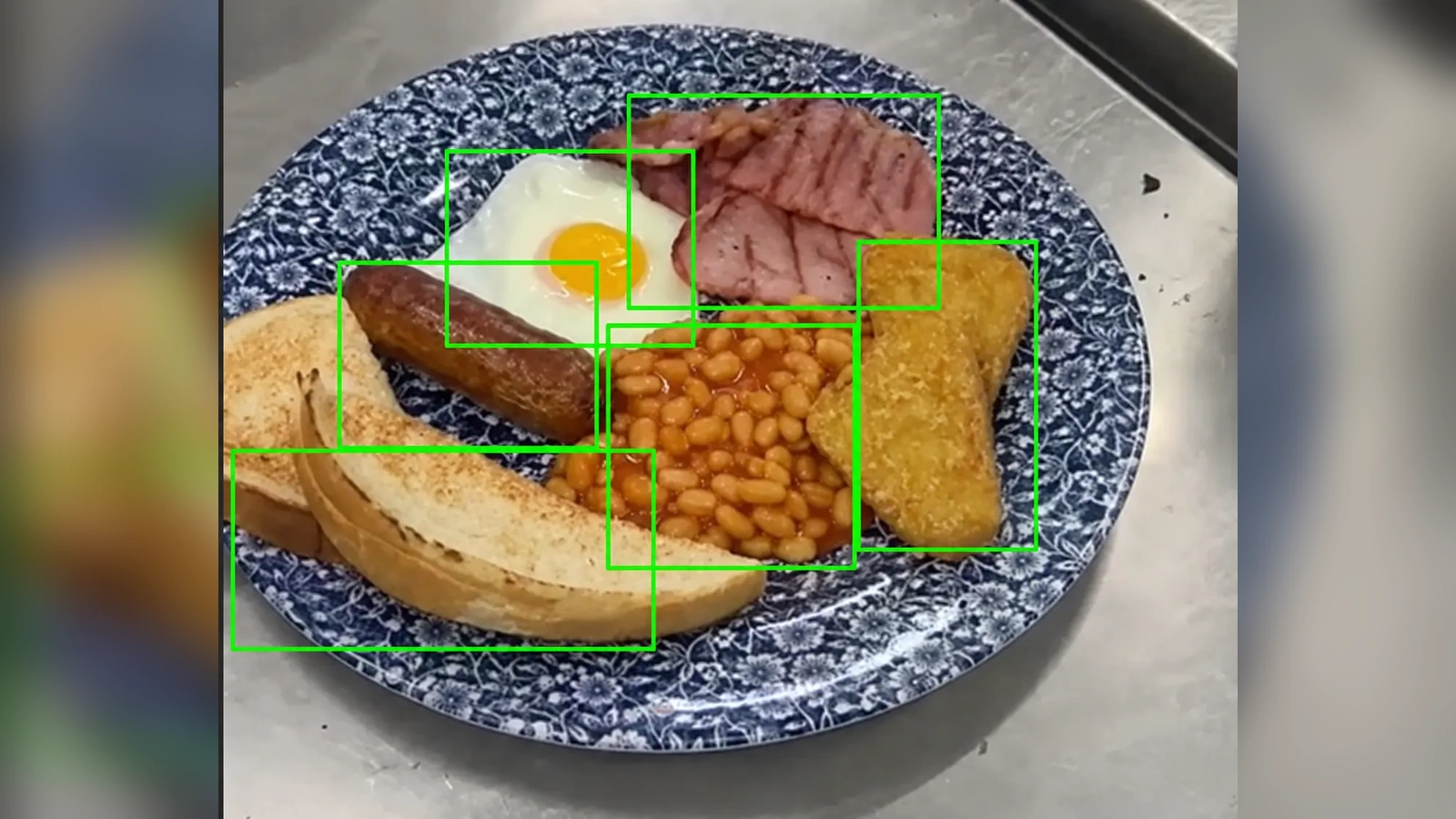
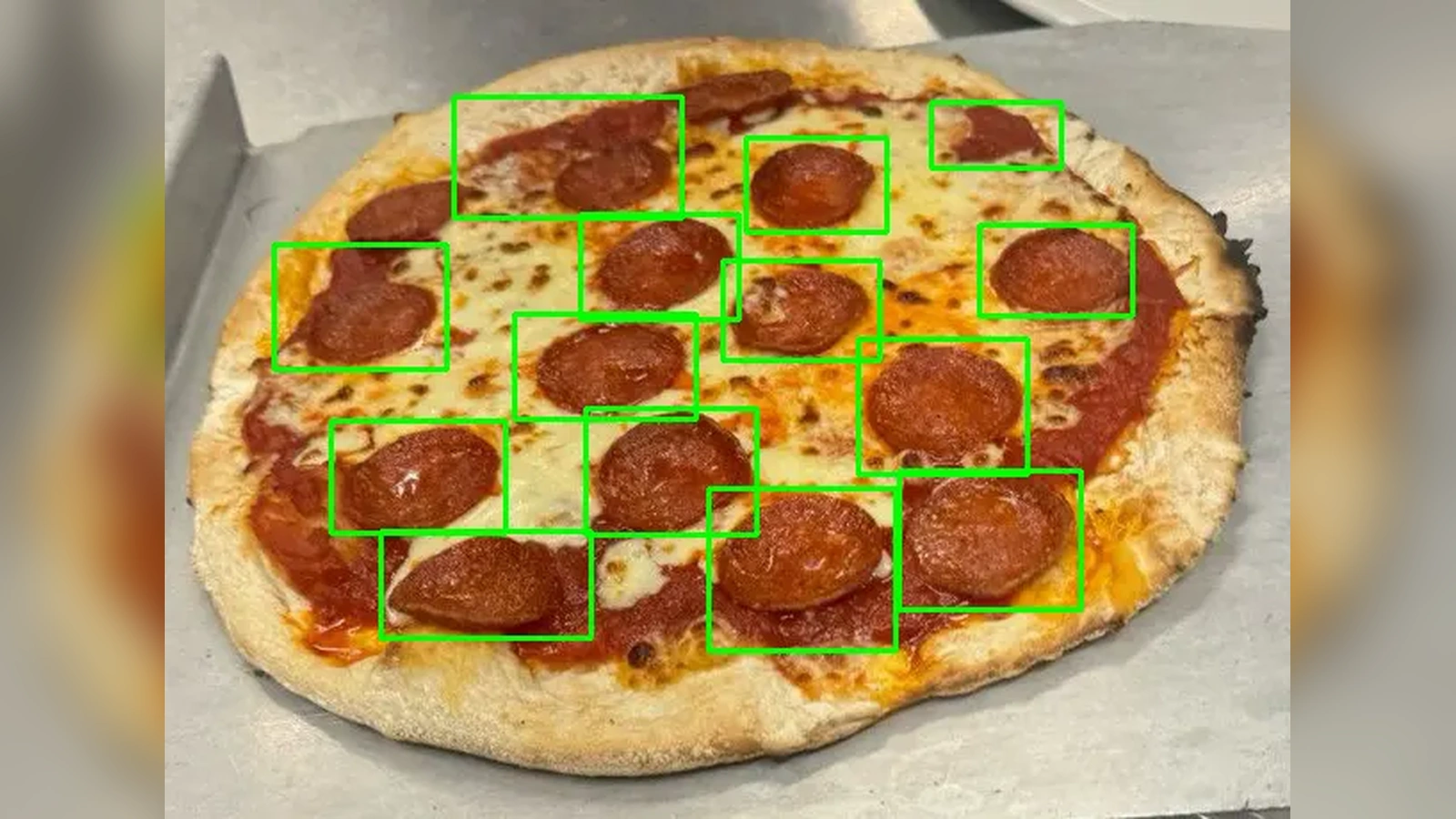
Built with Python, PyTorch and C++: YOLO-World detection and DDRNet segmentation on an NXP i.MX NPU, plus a custom rule engine.





Project duration
Six phases over six weeks, from QA rules to handover.
Team Size



What the Pipeline Delivered
The whole decision runs on the edge device: computer vision detects and counts every component on the NPU, and a lightweight rule engine on the same device applies the kitchen’s QA rules, with no cloud round-trip or video upload.
99.2%
Dish recognition accuracyThe on-device computer vision stage identifies the dish with 99.2% accuracy, giving the rule engine a reliable starting point for every plate.
79–99%
Ingredient counting accuracyBacon, sausages, hash browns, toast and beans are counted at 79–99% accuracy depending on the ingredient, turning a plate photo into rule-checkable data.
6 weeks
From brief to working pipelineAn eight-person team delivered QA rules, a purpose-built dataset, trained models and edge deployment on the target NXP hardware in six weeks.
Blackthorn AI’s system checks each plate in two stages, both on the edge device. A computer vision model on the NPU detects and counts every component on the plate. A deterministic rule engine then checks that output (what is on the plate, how many and where) against the kitchen’s QA rules, such as 14 sausages on a pizza or two toast slices. It returns pass or fail and names any rule that failed.
No. The QA rules are countable and deterministic, so a rule engine makes the decision. That is deliberate: edge NPUs are built for small convolutional networks rather than large multimodal models, so an LLM could not hit real-time latency on the device, and the explicit logic does not need one.
Yes. In this system the whole decision is made on the edge device: computer vision runs on the NPU and the rule engine runs alongside it. Neither the video nor the detection data needs to leave the device, so the pass/reject call lands in real time with no cloud round-trip. This also removes bandwidth cost and privacy exposure.
Blackthorn AI’s on-device pipeline reaches 99.2% dish recognition and 79–99% counting accuracy, depending on the ingredient. Detection and counting are largely solved. Portion estimation, such as judging 85 g of beans from a single image, is the hardest rule and the main limit on full pass/fail accuracy.
This project took six weeks from brief to a working on-device pipeline, delivered by an eight-person team. The work covered QA rule definition, a dataset of about 500 images, annotation and balancing, model training, deployment on the NXP edge device and handover. For a production-line inspection project, see our industrial computer vision quality control case study.