
Introduction
Ask a company how many AI tools it uses and you usually get a short list: the assistant IT rolled out, maybe a coding tool. Ask the teams and the list triples. Sales pastes call notes into a chatbot, HR tries a CV screener, a developer wires a model API into a script on a team card. None of it is malicious. All of it is shadow AI: AI that works with company data while nobody owns it, logs it or knows what it agreed to.
Related: AI governance consulting: how we inventory, classify and control every AI system
What is shadow AI?
Shadow AI is the use of AI tools, AI features or models for work without the knowledge or approval of IT, security or legal. IBM describes it as workers who “download or use unapproved internet-based AI tools”. It is a branch of shadow IT, but it moves faster: there is nothing to install, many tools are free, and AI features now arrive inside software the company already pays for.
In one line
The problem is not the AI. It is the missing owner.
A tool with an owner, a contract, a company login and logs is governed AI. The same tool without them is shadow AI.
Shadow AI examples
Most shadow AI falls into six patterns. The first three are the most common; the last two are the ones auditors find hardest to trace.
- 01
Personal chatbot accounts
Staff paste contracts, code or customer emails into a consumer chatbot on a private login.
- 02
AI features switched on in SaaS
A CRM, help desk or design tool ships an AI assistant, and an admin turns it on without review.
- 03
Browser extensions and plug-ins
Writing, summarizing or meeting tools that read every page or email they can reach.
- 04
AI note-takers in meetings
A bot joins calls, records them and stores transcripts with a vendor nobody assessed.
- 05
API keys on a team credit card
Developers call a model API from a script or product feature outside any approved account.
- 06
Models a team deployed itself
An open-source model or agent running on a cloud account, with no owner in the register.
Why shadow AI is a risk
Shadow AI costs money when something goes wrong. In IBM’s 2025 Cost of a Data Breach research, a high level of shadow AI added USD 670,000 to the global average breach cost, and 97% of breached organizations that had an AI-related security incident said they lacked proper AI access controls. Most of the risk comes from five gaps between approved and shadow tools.
| Compared on | Approved AI | Shadow AI |
|---|---|---|
| Owner | A named owner and a business purpose | Nobody, or whoever signed up |
| Data terms | Enterprise contract and data processing terms | Consumer terms; your data may be kept or used for training |
| Access | Company login (SSO), removed when people leave | Personal accounts that leave with the employee |
| Logs | Prompts, outputs and admin actions logged | No record of what was shared or decided |
| Regulation | Risk tier known, duties assigned | Nobody knows it is in scope |
The cost
USD 670,000 more per breach where shadow AI is high.
IBM Cost of a Data Breach 2025. In the same research, 63% of 600 organizations had no AI governance policies to manage AI or prevent shadow AI.
How to detect shadow AI
No single source finds everything, so combine what people tell you with what your systems show. In our AI governance consulting work, this is the first week of the assessment, and its output is an AI system register with an owner and a vendor for every tool.
- Ask first, with an amnesty A short survey or 15-minute interviews per team. People report more when using a tool is not held against them.
- Check single sign-on and OAuth grants Look for AI apps that staff connected to company accounts, mail or files, and what each one may read.
- Read the spend data Expense reports and card statements show AI subscriptions bought outside procurement.
- Scan network and browser logs DNS, proxy or CASB logs show traffic to known AI domains; browser management shows AI extensions.
- Review SaaS admin consoles List the AI features already enabled inside the tools you pay for, and who turned them on.
- Search code and cloud accounts Find model API keys, AI SDK calls and self-hosted models in repositories and cloud projects.
Reports built by hand from legacy systems, spreadsheets and ad hoc file submissions gave way to one data warehouse, about 65 migrated pipelines and 13 secure web forms for direct data input, delivered in 55 weeks. The network now frees over 1,000 staff hours a year, and reports are ready 50% sooner.
Read the case study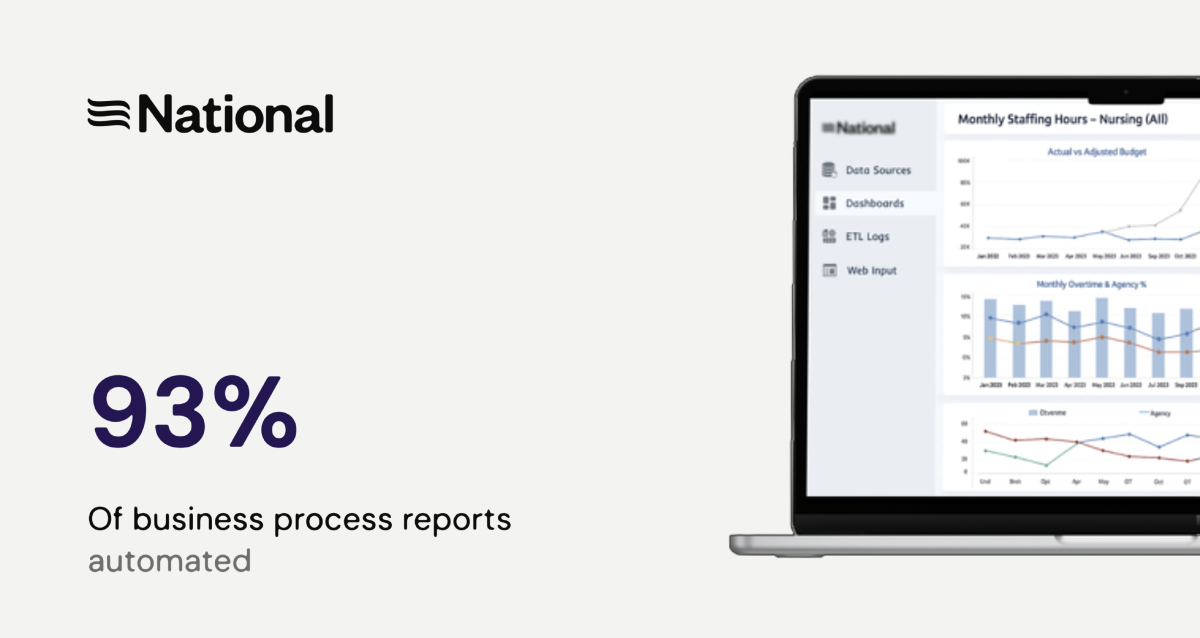
How to govern shadow AI without banning it
Finding the tools is half the work. The other half is deciding what happens to each one, so people keep the benefits and the company keeps control.
- 01
Put every tool in one register
Name, vendor, owner, users, the data it touches and what it is used for.
- 02
Decide: approve, restrict or replace
Each tool gets a decision and a reason, not a blanket yes or no.
- 03
Offer an approved alternative
A ban without a sanctioned tool pushes use further out of sight.
- 04
Set data rules by class
Public data may go to approved tools; customer, patient or source-code data only to tools with enterprise terms.
- 05
Switch on the controls
Company login, admin roles, logging and retention settings on every approved tool.
- 06
Check the EU AI Act tier
A shadow tool that screens CVs or scores customers can make you the deployer of a high-risk system.
The last point matters more each year. The EU AI Act applies to how an AI system is used, whoever approved it, and the Digital Omnibus on AI set 2 December 2027 for the high-risk rules on uses such as hiring, credit scoring and education.
A machine learning engine converts drug codes for rebate claims, detects billing anomalies and removes duplicate or reversed claims, with a built-in interface for reviewer feedback, delivered in 12 weeks. 83% of raw claims convert with no manual step; the other 17% are flagged automatically for human review.
Read the case study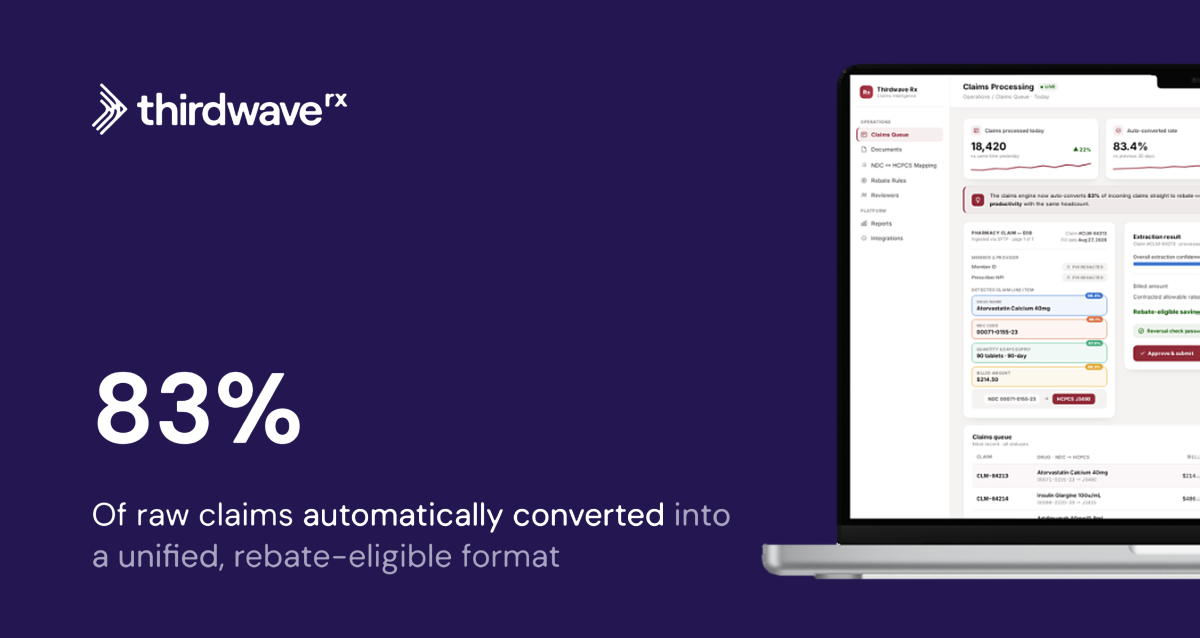
Checklist: How exposed are you to shadow AI?
Tick what is already true for your company.
High exposure. Start by asking each team which AI tools they use, with an amnesty.
AI Governance Consulting
Find the AI your teams already use
A free 30-minute triage call lists your AI systems with you and flags the ones with regulatory exposure. The 3–4 week gap assessment then builds the full register, classifies every system under the EU AI Act and ranks the gaps. Fixed fee from €5,000 in Europe, £4,700 in the UK and $6,000 in other regions.
FAQ
What is shadow AI?
Shadow AI is any AI tool, feature or model used for work without the knowledge or approval of IT, security or legal. Typical examples are personal chatbot accounts, AI plug-ins and AI features switched on inside SaaS tools. The risk is not the AI itself but the missing owner, contract, access control and log.
Is shadow AI the same as shadow IT?
Shadow AI is a kind of shadow IT, with two extra risks. AI tools take in whatever people paste into them, so sensitive data leaves faster than with an ordinary unapproved app. And AI outputs can shape decisions about customers or employees, which brings rules such as the EU AI Act into play.
Is using ChatGPT at work shadow AI?
Only if it is not approved. A company account with enterprise terms, single sign-on and agreed data rules is governed AI. The same tool on a personal account, used with customer or company data, is shadow AI.
How common is shadow AI?
Very. In Microsoft and LinkedIn’s 2024 Work Trend Index, 78% of AI users said they bring their own AI tools to work. In IBM’s 2025 Cost of a Data Breach research, 63% of the 600 organizations studied had no AI governance policies to manage AI or prevent shadow AI.
How do you detect shadow AI?
Combine what people tell you with what systems show. Ask each team with an amnesty, then check single sign-on and OAuth grants, expense and card data, network and browser logs, SaaS admin consoles, and code repositories for model API keys. In our AI governance consulting work this is the first week of the assessment.
Should companies ban AI tools?
A blanket ban rarely works: people keep using the tools, only less visibly. A better approach is to give staff an approved assistant with enterprise terms, set rules for which data may go where, and review new tools quickly so there is a legal route to use them.
Does the EU AI Act apply to shadow AI?
Yes. The AI Act applies to how an AI system is used, not to whether IT approved it. If a team uses an unapproved tool to screen job applicants or score credit, your company can be the deployer of a high-risk system, with duties that apply from 2 December 2027 under the Digital Omnibus (Regulation (EU) 2026/1744).
Know every AI tool your company runs
Bring what you know about the AI your teams use. On a free 30-minute triage call we map it with you and send a short note on where your regulatory exposure sits.
Sources: IBM X-Force, 2025 Cost of a Data Breach Report: Navigating the AI rush (research by the Ponemon Institute, 600 organizations); Microsoft and LinkedIn, 2024 Work Trend Index (31,000 people in 31 countries); Regulation (EU) 2024/1689 (AI Act) and Regulation (EU) 2026/1744 (Digital Omnibus on AI).